There are days when you need a break from the world but still want to sit down and sew. A simple strip-piecing project from your stash is a practical solution—no complicated planning, no new materials, and no pressure to finish a large quilt. This kind of low-decision sewing keeps your hands moving, uses what you already have, and gives you a useful fabric panel that can become a table runner or part of a future quilt.
A Project without a fixed outcome
The goal here is not to start a new quilt with a clear plan. The goal is to create fabric.
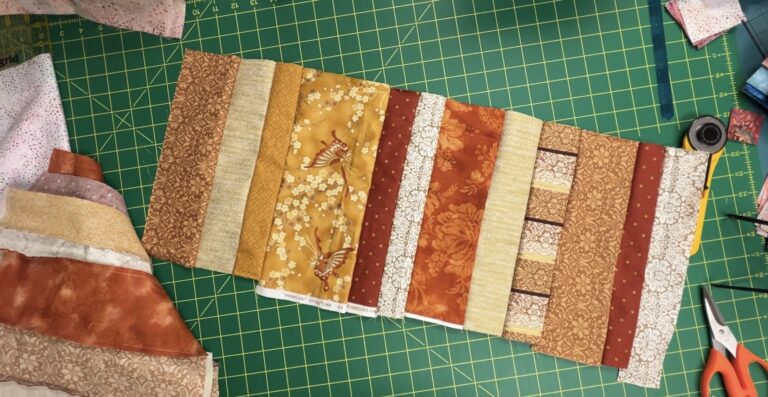
By sewing strips into panels, you give yourself a useful unit that can later become many things: a table runner, a quilt center, a border element, or simply fabric you didn’t have before. Deciding what it becomes can wait.
Fabric Choices: Minimal Rules
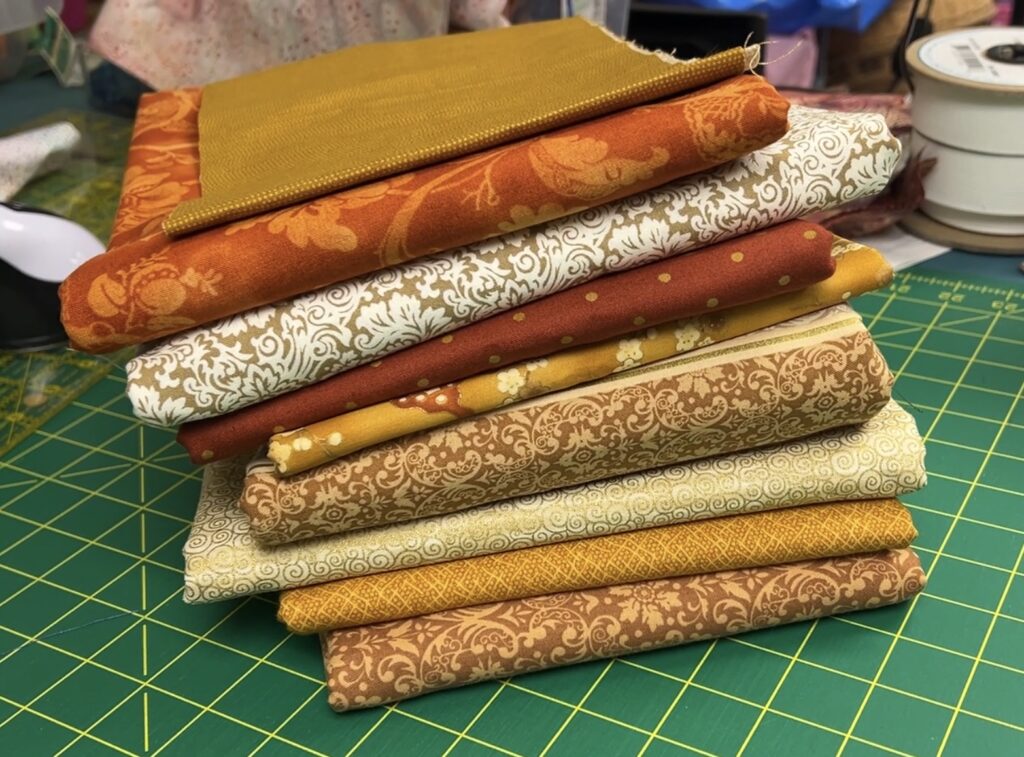
Working from the stash keeps this project grounded and accessible. Staying within one color family or theme reduces decision fatigue, while small shifts in value—light, dark, mostly medium—keep the panel visually active.
Strips can vary in width. Let the fabric dictate the cut. Large-scale prints benefit from wider strips; smaller prints can be narrower. There is no need to make everything uniform.
Construction Approach: Repetition Over Precision
Shorter strip segments are easier to handle and faster to sew. Pair strips, then build incrementally by adding one strip at a time. Pressing and trimming can wait until later—or not happen at all during the initial sewing session.
This approach prioritizes momentum. Sewing becomes rhythmic, grounding, and familiar.
Let the Panel Evolve Naturally
As the panel grows, occasional adjustments in value or contrast help break up repetition. These decisions can be made in the moment, without stopping the flow of sewing.
When the strips are gone, the session is done. Of course you stop at any point, and you could also cut more strips and keep going.
Quilting as self-care
Not every quilting session needs to move a major project forward. Some sessions exist to keep your hands moving and your confidence intact.
That kind of quilting matters, too.
A Final Note
If you find that strip piecing feels especially calming or satisfying, it can easily grow into a larger project. Many quilts rely on this same steady, repetitive construction. If you’d like to see other designs built around strip-piecing methods, take a look at my Interwoven quilt and the Striped Illusion quilt. Both use simple, efficient piecing to create strong visual impact without complicated construction. These are good options to keep in mind when you’re ready to turn this kind of sewing into a full quilt.